
Musings
Articles and thoughts from the mind of Deke
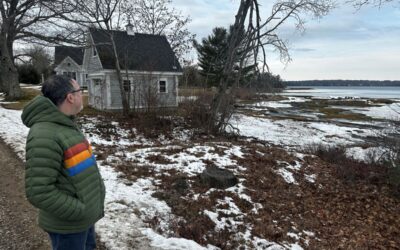
In Far North Maine with Adam Tober (Mo’ Mosrite!)
Adam is definitely THE resource of knowledge when it comes to the guitars that Semie Moseley made in the 1970s and 1980s, an era I’m not as familiar with.
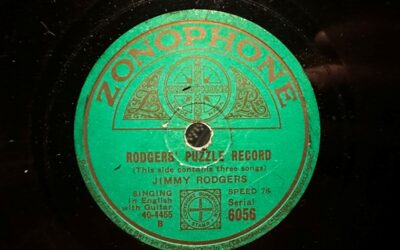
Jimmie Rodgers’s “Rodgers Puzzle Record”
Jimmie Rodgers’s “Rodgers Puzzle Record” was released in 1931 in England, Australia, and India. It was a novelty record with three concentric grooves with three different songs.

RIP Raul Malo
Super sad news to wake up to this morning: Raul Malo of the Mavericks has passed away at the far-too-young age of sixty.

A Visit to San Francisco’s Fairmont Hotel
I don’t know if the Fairmont is the fanciest hotel in San Francisco, but it must be right at the top.
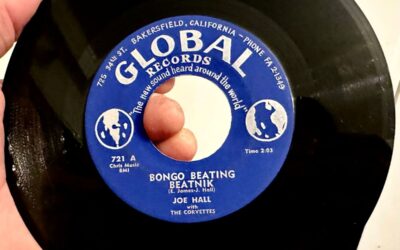
Joe Hall’s “Bongo Beatin’ Beatnik” on Global Records
Just did a hotel lobby trade for a record I’ve been tracking down for twenty-five years: Joe Hall’s “Bongo Beatin’ Beatnik” on Global Records.

AI Sucks
I plant my flag firmly in the dirt, and say this: AI SUCKS. I don’t care if they are going to make it “even better.”
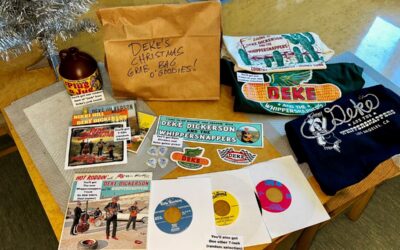
The Deke Christmas “Grab Bag o’ Goodies!”
Christmas and holiday shopping? It’s a yearly tradition—the Deke Christmas “Grab Bag o’ Goodies!”
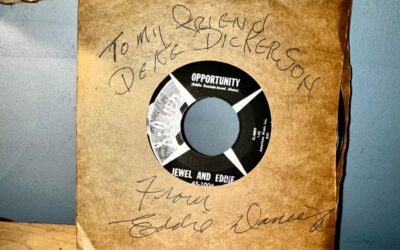
Remembering Eddie Daniels
Eddie Daniels made a bunch of great R&B and rock ’n’ roll records in Los Angeles in the 1950s, including a really good revamp of Professor Longhair’s “Goin’ to Mardi Gras,” and others, like “Hide Go Seek” and “Whoa Whoa Baby.”
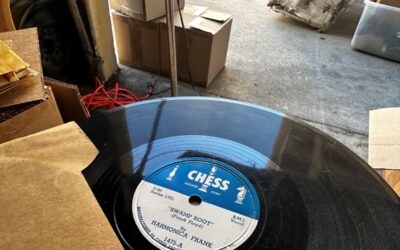
Harmonica Frank Floyd’s “Swamp Root” on Chess Records
And then, there it was. It was like a mirage. Was I seeing things? A freakin’ 78 rpm copy of Harmonica Frank Floyd’s “Swamp Root” on Chess Records. In case you don’t know, this record is RARE.

Norman Hamlet Mosrite Interview
Norman Hamlet is the longest continuously employed steel guitar player in history. He played for forty-nine and a half years with Merle Haggard and the Strangers.